Origami
-
Posts
21,584 -
Joined
-
Last visited
Content Type
Profiles
Forums
Gallery
Events
Store
Everything posted by Origami
-
2026 Fragfest - show off the frags you brought home.
Origami replied to Gatortailale's topic in General Discussion
Hopefully fixed the jpg uploading problem. -
2026 Fragfest - show off the frags you brought home.
Origami replied to Gatortailale's topic in General Discussion
I'm looking into the uploading problem. -
I'd like to echo Salty Rambler's sentiments: Thank you to the new board members for you interest and for sharing your time and talents for the benefit of the club and the community.
-
Help paying for membership
Origami replied to Ramullins86's topic in Welcome to WAMAS: FAQ / FYI / Hobby News
At one time, we used to be able to manually process a credit card transaction. Not sure if Scott or Nikki have done that recently. Sent from my SM-S938U1 using Tapatalk -
Milton, did you ever get to the bottom of this? Sent from my SM-S938U1 using Tapatalk
-
Have you tried running the head in a vinegar bath for a few hours? It could be as simple as calcium carbonate precipitating out on the bearing surfaces. Precip is faster on warmer surfaces and could interfere with startup. I have MP40s, not MP10s, so my experience with the soecific model is nil but my experience with MP40s goes back to their first generation. If you have to send it in, I've found their service to be excellent. Sent from my SM-S938U1 using Tapatalk
-
I found that, once things are stable and growing, you'll quickly find balance with kalk because, in the end, it can only supplement so much. After that, you'll be looking for another supplementation means. Not that I'm recommending it, but in some large systems run by some very notable and successful aquarists, they've gone so far as to "toss" a dose of kalk slurry into a high-flow area of their tank to punch up calcium and alkalinity levels. I've even done it at times but, I'll tell you, the short pH spike has to be managed because it can be pretty severe if you dose too much too quickly.
-
I've run kalkwasser on and off for decades. Here are my observations. Kalk is a balanced additive. It provides both alkalinity and calcium in the basic 2:1 ratio needed for the hard coral (i.e., SPS) skeleton formation. Details: This ratio is an over-simplication as it doesn't reflect the content of magnesium and strontium in these skeletons. But it's still a good rule-of-thumb for understanding. Kalk (aka calcium hydroxide, or slaked lime) saturates in fresh water at a very, very low level. This limits how much alkalinity you can dose per day. Details: 1.89 grams per liter of fresh water at 0 degrees C, down to 0.77 grams per liter at 100 degrees C. At 25 degrees C (77 F), solubility is 1.59 grams per liter. It's solubility and pH are so well known and happens at such low concentrations that it is actually considered a relatively good standard for pH calibration at high pH levels (pH of 12.54 at room temperature, 77F). It also means that, if you're not running the stirrer in your kalkwasser reactor, you may not have good control of the concentration of the solution. This is IMPORTANT. When stirred with all particulates settled out, a liter kalkwasser is saturated and, at 77F, delivers 808 ppm of calcium and 40.8 milliequivalents of alkalinity to your tank. (Of course, that's diluted by the volume of your tank). That limitation means that, when administered as part of a top-off system (that compensates for evaporation), evaporation limits how much alkalinity you can dose in a day. This limitation may not be a factor in new systems without much consumption (i.e., calcium carbonate (hard coral skeleton) deposition / formation), but in systems with high consumption, is likely to be insufficient and will require additional supplementation (e.g., calcium reactor or two-part dosing). For example, let's say that a 100 gallon (378.541 liters) system evaporates 1 gallon (3.78541 liters) of fresh water per day, and that you're replacing that evaporation with saturated kalkwasser. That means you're adding about 6 grams of kalk total per day - that's enough to form about 8 grams of coral skeleton (calcium carbonate) or about 3 cubic centimeters of skeleton (at most, assuming of the consumption goes to skeleton formation). If your goal is to maintain stable calcium and alkalinity parameters (and it should be once you've reached your targets), then supplementation = consumption. That is, replace what is used. Anything more, and levels in your water will increase. Anything less, and the levels go down. Details:You can use these "trends" in your test measurements to estimate consumption. Over the long term, if you've got corals that are growing and increasing in size, consumption will go up and demands on your supplementation methods will increase. Following this, if you find that your levels are increasing, you need to add less kalkwasser (or increase consumption). Here's the thing, though, if you're adding it as part of your ATO and your evaporation rate is high enough that you're delivering more than is needed, then you basically need to add less kalkwasser. This means less ATO water through the kalkwasser reactor. You really can't - or shouldn't - try adjusting the stirrer on/off times. That's basically going to be a crapshoot as you won't be able to reliably control the concentration of the dissolved kalk in solution (which is one of the key reasons kalkwasser was once highly regarded in the hobby) and you're likely to see your levels fluctuate without much control. You CAN adjust how much ATO water is going through the reactor, but is you're basically running all your ATO through the reactor, reducing this (without compensating with ATO that bypasses the reactor) will only reduce your water level and raise ion concentrations (i.e., salinity). One solution is to abandon kalkwasser for now and move to a two-part approach. Another is to add only as much kalkwasser as is needed, and to supplement the rest of your ATO with fresh water that bypasses the ATO. A third approach is to manage your parameters with water changes during this time when your tank is reasonably young without much growth, and then to switch over to kalk when things are growing more. And yet another is to increase consumption (adding larger, fast-growing corals, changing light management to increase growth, etc.). The first two approaches may require you to invest in dosing pumps, the second being very popular even today. The third was an approach used often a couple of decades ago. (It's still valid.) To reestablish your levels, though, will require that you take your kalk reactor offline (that is, bypass it in your ATO setup) and to let your levels drift down to your target levels. If the system is small enough, you can perform water changes to help move things along. I'm sure that I've missed a few things that I've learned over the years. But, while kalk is great (inexpensive, fairly simple, low-investment setup), I'd encourage you to look at the difficult parts of it. Namely, limited alkalinity delivery (due to low saturation level) and accidental overdosing. The first of these requires that you will eventually make additional investments in other delivery methods while the second means you'll be investing in additional hardware and complexity to manage/reduce the risk of an accident. I still hold kalkwasser in very high regard, but you should go into it with open eyes.
-
Received this email this morning announcing the end of an era. Insurmountable financial issues stemming from recent MACNA conferences and COVID sunk the organization. ***** Dear MASNA Membership, It is with heavy hearts that the Board of Directors of the Marine Aquarium Societies of North America (MASNA) announces the closure of the organization. Despite our best efforts to revitalize MASNA and navigate the challenges of recent years, we have been unable to secure the necessary support to sustain our operations. MASNA proudly organized the Marine Aquarium Conference of North America (MACNA), which for over three decades served as a thriving resource for aquarists to connect with peers, learn from experts, and grow their skills. We are forever grateful for the tens of thousands of attendees, hundreds of vendors, a wide range of sponsors, and upwards of 200 presenters over the years. However, like many in-person events, MACNA faced significant challenges during and after the COVID-19 pandemic. These impacts have contributed to the difficult decision we now face. As the sun sets on MACNA in its current form, we take pride in the meaningful contributions the conference has made to the marine aquarium community. Over recent years, the way we communicate and connect has shifted dramatically, reshaping the landscape for the organizations that serve our community. The growing dominance of digital platforms has transformed how knowledge and expertise are shared, but this evolution also highlights the need for a new, modernized MASNA-like community organization—a centralized hub where the marine aquarists can unite, collaborate, and succeed together. While MASNA must close its doors, the challenges we face today present an opportunity where something new can rise—a future organization that will meet the needs of aquarists in this digital age. We believe that with the right vision, dedication, and community support, something new and even stronger could reestablish in its place—a community-driven platform that not only connects aquarists but also upholds the passion and commitment to responsible practices that MASNA has always represented. The potential for a redefined MASNA remains, and perhaps one day, we will see its revival, adapted to the evolving needs of our community. For many years, MASNA served as a trusted source of knowledge and expertise, and as we move forward, we encourage all aquarists to remain diligent in their pursuit of excellence by continuing to seek out reliable, validated information. Exceptional, vetted sources of knowledge still exist, including respected print publications, many of which are now available digitally, offering both convenience and a reduced environmental impact. The MASNA board urges you to continue supporting the remaining community groups and locally-owned brick-and-mortar fish stores. These pillars of our hobby are essential for maintaining the high standards that make aquarium keeping such a meaningful and rewarding experience. Without them, it may become too easy for the quality of the marine aquarium community to wane. Thank you for your unwavering dedication throughout the years. Though MASNA may be closing, the passion for the marine aquarium hobby lives on through each of you. With gratitude, The MASNA Board of Directors Sent from my SM-N986U1 using Tapatalk
-
I'd like to extend a warm WAMAS welcome to Todd and all the folks at Champion Lighting and Supply as a WAMAS Platinum Sponsor. Thanks Todd! Now, a brief introduction for our community: In business since 1984, Champion is the USA's largest distributor of exclusively saltwater products and is located in Ambler, PA, a suburb of Philly. They are a stocking distributor, stocking 99% of what they sell. Combined with their close proximity to the DC region, that means normally quick deliveries for orders that you place to them. If you need help and call them (toll free at 800-673-7822), you not only get a "real person," but you also get an experienced aquarist as they are both owned and staffed by aquarists familiar with each and every product that they sell. So, before you put your hard-earned money to some newly discovered deal-of-a-lifetime offered by some unknown source that might not be around in six months or a year, give they folks at Champion a call and see what they know and might suggest. No obligation to buy and pick their brains. They're here to help make you successful and, if they succeed at that, they're hoping that you'll become a long term customer in the long run. Speaking of customers... Their customer base includes some of the preeminent aquariums today, including the Smithsonian Institute, Baltimore, Shedd, New Jersey State, North Carolina, Tennessee, Mystic, Waikiki and New England Aquariums, Sea World, Houston Zoo, Aquarium of America's, plus numerous universities and public institutions.
-
WAMAS Welcomes Coral Candy Aquaculture as Sponsor!
Origami posted a topic in Coral Candy Aquaculture
I'd like to welcome WAMAS' newest Platinum Sponsor: Coral Candy Aquaculture. Based in Alexandria, Brian (the founder of CCA) discovered his saltwater passion while working for an aquarium maintenance company. His passion soon developed into an obsession, leading him to start Coral Candy Aquaculture. His goal: To provide you with the beast quality coral for your reef tank at an affordable price. Visit the website at https://coralcandyaquaculture.com Thanks, Brian, for supporting WAMAS! -
Next meeting is slated for North Bethesda Middle School and will feature Joe Yaiullo from the Long Island Aquarium. Sent from my Note 10+5g using Tapatalk
-
Getting Out & Selling 240G Reef Tank -Livestock First
Origami replied to loknar28's topic in General Discussion
Approved getting out of the hobby thread. -
Welcome back! It's been awhile. Sent from my Note 10+5g using Tapatalk
-
Hey Jon. Sorry. Been in a similar, heartbreaking place. Picking yourself back up can be tough, but live, learn and move forward. Good luck and my best to you and Maureen. Sent from my Note 10+5g using Tapatalk
-
Regarding the sump debris: Routine scheduled cleanup is pretty normal. Some people will shut the flow down and use an inexpensive bucket-head wet-or-dry vacuum (available at Home Depot) to suck the final bit of wet muck out of the bottom of their sump. They're about $30 these days.
-
We're pleased to announce our newest Platinum Sponsor, Capital Coral, to the WAMAS family! Unique in the sense that the founder of Capital Corals, Dr. Michael Gerdes, is also a co-founder of WAMAS (and a recent speaker of ours), this is truly a full-circle moment. Located in Albany, New York, Capital Corals was established to support ongoing coral research and restoration efforts. Their mission (as described on their website) is to work with the Ecotourism industry to implement the Reef Experience Snorkel Trail for local water beautification, coral education, and reef protection. They apply the most recent scientific advances and innovative approaches for coral reef habitat creation and restoration, working with local stakeholders to contribute to reef resilience and ecosystem services. They also provide research services for the scientific community to advance our understanding of coral reefs and promote their conservation. They maintain a coral aquaculture facility and wholesale store, as well, which we may use as a future source for WAMAS FragFest. Stay tuned!
-
@liquidgsr, just a suggestion, but post your questions in a separate thread in the General Discussion area rather than burying it in an old thread of yours. It may get more attention that way. Inverts (such as your shrimp) are very sensitive to salinity changes (much more so than fish) and need to be acclimated very, very slowly. Improper acclimation can lead to inverts dying, often times, within several days to a week or more, later. Have you figured out your other technical issues? If not, go ahead and post separately in the appropriate forum.
-
Welcome Capital Exotic Fish - WAMAS Sponsor!
Origami replied to Origami's topic in Capital Exotic Fish
Hey, Garrett! It's been a long time. Welcome back to the hobby! Sent from my Note 10+5g using Tapatalk -
Welcome Capital Exotic Fish - WAMAS Sponsor!
Origami replied to Origami's topic in Capital Exotic Fish
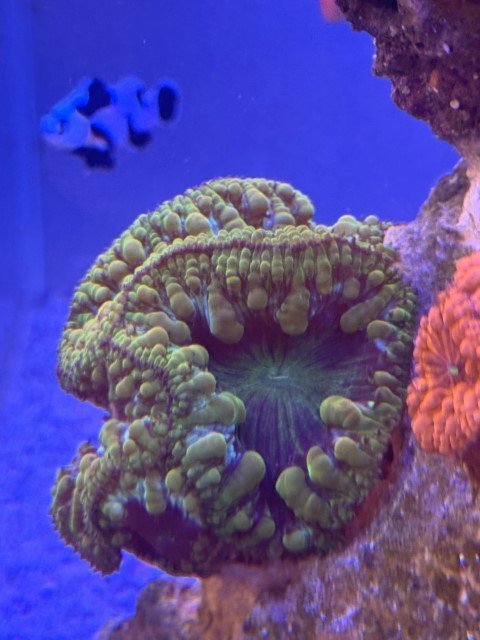
Here are a few pictures that I have from their store...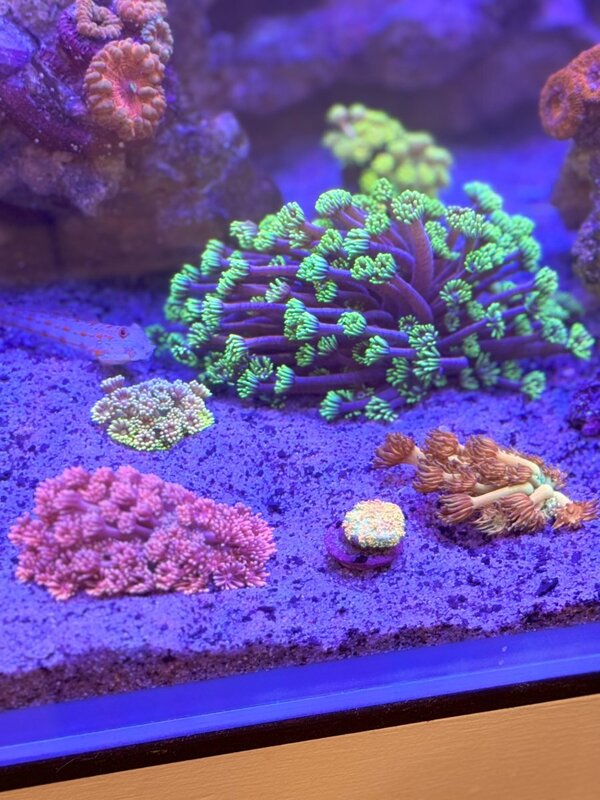
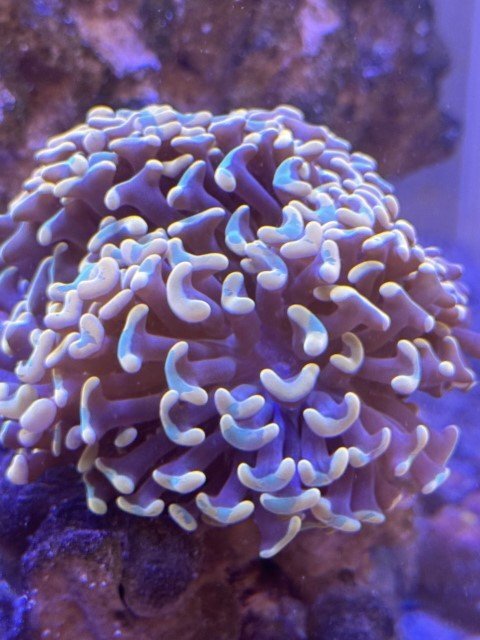
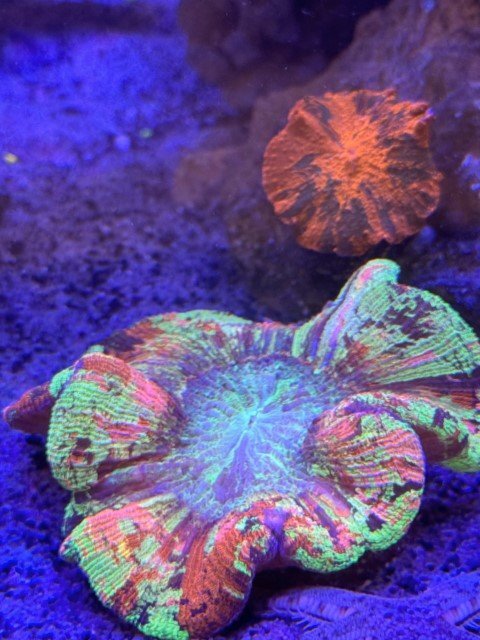
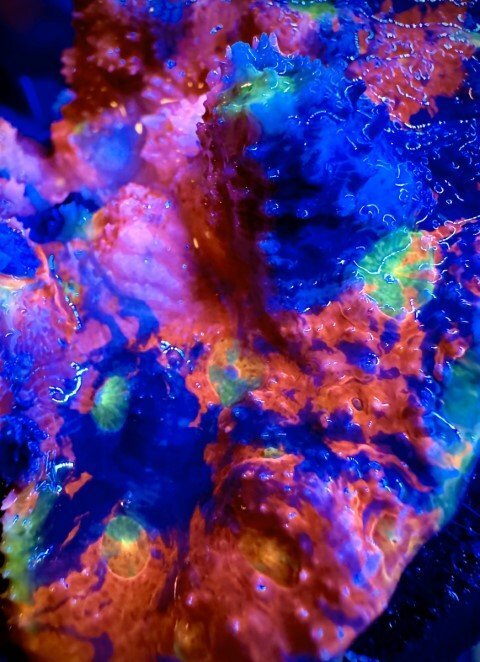
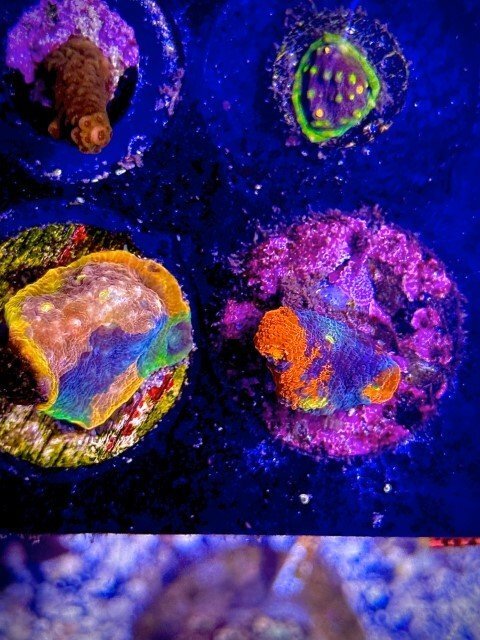
-
I'd like to take this opportunity to welcome Capital Exotic Fish to the WAMAS family as a Platinum Sponsor! Having opened their store in February 2023, they're celebrating their one year anniversary in DC, and have already made a splash at out most recent meeting with a big donation of quality, high-end corals right out of their newly launched saltwater department. (Thank you!) Chris and Sean are in charge of the day-to-day operations at Capital Exotic Fish. Both are experienced reefers and are excited about developing relationships with our reefing community. Chris comes from the AZA (Association of Zoos and Aquariums) side where he worked and maintained several reef exhibits for different intuitions and Sean has a lot of experience as a hobbyist as well. They carry a lot of new, exciting products such as Dalua lights and Quantum trace elements, along with a wide variety of corals from green star polyps to delicate SPS and chalices (and always have 100's of frags to choose from). On the fish side, they primarily keep a large inventory of inverts and nano fish but are willing to make special orders for whatever you are looking for. They are also excited to be the DC area source for UNS aquariums and their new reef aquariums. Located right down the road from the National Cathedral at 3404 Idaho Avenue, NW, they're literally centrally located for the entire WAMAS/DC community! Come by and see why so many people have already chosen their store for all their aquarium needs.
-
Yes, it is! Sent from my Note 10+5g using Tapatalk
-
Looks great, John. I'm looking forward to seeing you at the meeting. Sent from my Note 10+5g using Tapatalk
-
Sexy Shrimp (Thor amboinensis) breeding method and refinement
Origami replied to DaJMasta's topic in Propagation and Breeding
Great job! Please keep us updated on your methods and progress! -
Hard to say from that angle. Could be a baby. Watch it for a week or two.you may see tentacle buds. I had something similar many years ago with a GBTA and it turned out to be a baby, rather than the traditional split into a larger, more mature BTA. Sent from my Note 10+5g using Tapatalk