
DaJMasta
-
Posts
662 -
Joined
-
Last visited
1 Follower

DaJMasta's Achievements

Master Reefer (8/13)
-
Do you leave your pumps off for a long period? Or has it happened recently? I wonder if something settled on it and smothered it or something. I've seen a little bit of direction-specific polyp loss from being overlit, where the rest of the coral still seemed fine, but it usually slowly spread out from that spot, was accompanied by bleaching, and it probably wouldn't be just a central polyp unless it was like conical. A fish could certainly do something, but are there that many fish that would eat/damage the one polyp and then leave the rest alone in the long term? Mine always came back for more eventually
-
DaJMasta's 45G AIO Cube Mixed Reef
DaJMasta replied to DaJMasta's topic in Dedicated Tank (Build) Forum
That kind of thing could certainly work, but it's sort of a mess to try and incorporate - this is an AIO system, so either you add it on like a sump, or you add it on like a HoB, which doesn't physically have a great option where my tank is. Probably the option that would make sense would be to mount it over the tank, so you pump water into it and then let it fall back in, but there's not a lot of space and I don't know if I want to mount it to the wall of this apartment, so it's a harder sell. I thought about it and looked around a bit and decided I could probably make my own, though. So I bought some low color temperature halogen bulb LED replacements as well as some ceramic bases, and I've got a 12V power supply and a low speed fan to go along with. The idea is to design and 3d print a plastic box that slides into the media basket tower - black sides, but a clear plastic basket in the center with short handles to remove and then a black plastic hood with the lights, electrical, and vented cooling fan. I think 3 narrow beam halogen replacement bulbs should allow pretty considerable depth penetration (the chamber is something like 20 inches high, but I think the basket will go down maybe a foot), it will fit where the previous one was, it will be larger in size, and with reasonable thermal design, it should be no risk to itself or the creatures around (12V DC, fused, and seated above the top of the glass to prevent flooding.) Have to get to designing it and will probably need an iteration or two, but then it will be time to try and grow something with it. Since taking the scrubber offline, I had the big film algae bloom, some hair algae in the display (especially on powerheads), and finally a bit of cyanobacteria bloom, but everything's calming down a bit. I think it's back to some level of equilibrium for now. -
DaJMasta's 45G AIO Cube Mixed Reef
DaJMasta replied to DaJMasta's topic in Dedicated Tank (Build) Forum
And today, a little PSA for AIO users: vacuum your rear chamber! I got about a quart of sludge out of mine and it may have been the first time since I started the tank up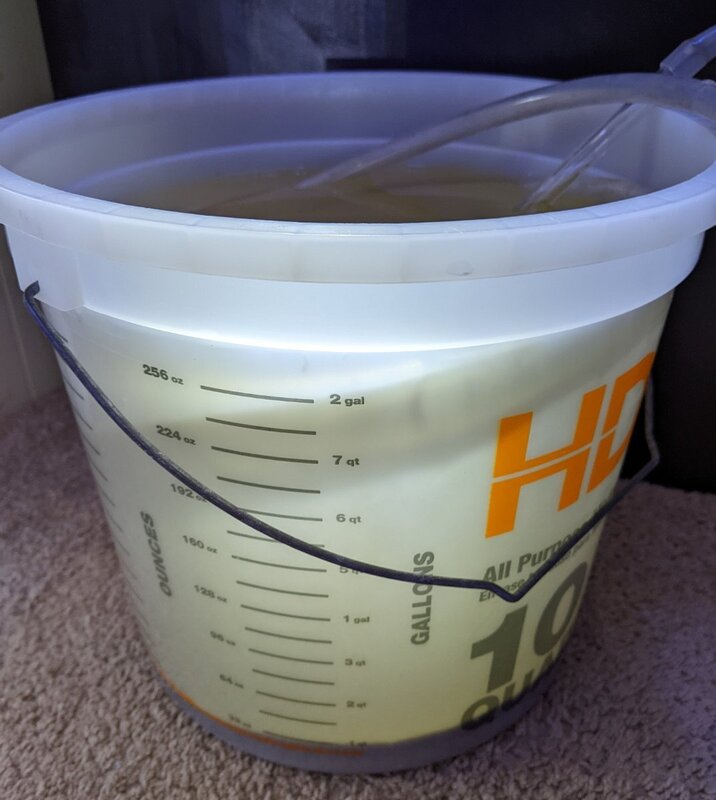
-
DaJMasta's 45G AIO Cube Mixed Reef
DaJMasta replied to DaJMasta's topic in Dedicated Tank (Build) Forum
Yeah, the power supply is still good - measures a tad over the 15V nominal, but well within tolerance. They replaced it the first time the same thing happened after a few months, but the warranty is only a year. If I have to guess, it's an issue with waterproofing, since the failure mode isn't fully short or open, but that the lights get just really dim. I'm tempted just to DIY it because scrubber prices just keep going up for some reason - just a plastic piece and some lights and a pump, but the very cheapest is like $200 and virtually nothing actually fits in the rear chamber of an AIO. Will probably do a 3d printed shell, a clear algae basket, and then a relatively powerful spotlight type light to shine down the middle. Should fit reasonably in the media basket tower, not exactly a scrubber without the airflow (maybe it can be added too), but at least an algae reactor and a way to offset the evening pH swing. -
DaJMasta's 45G AIO Cube Mixed Reef
DaJMasta replied to DaJMasta's topic in Dedicated Tank (Build) Forum
Was seeing more algae buildup on the glass than usual this past week and went to clean the scrubber... the lights are as dim as can be while still being on. Second time in two years, same fault, and of course it's out of warranty. I wouldn't recommend the Santa Monica Filtration Drop 1.4X, especially for the insane price it's currently going for. I don't know what my scrubber options are, now, since the chamber really could only accommodate something about that size. I would like some kind of scrubber as nutrient export, so if anyone's got recommendations, I'm all ears. -
Salinity checking journey - finally landed on TM Hydrometer
DaJMasta replied to Gatortailale's topic in General Discussion
It's possible, most plastic bottles are liquid proof but don't necessarily have a vapor barrier to block all water vapor from entering/leaving, but the amount should be very small, and should go away in measurement noise if the amount of solution is large. It could be that some test solutions separate or precipitate over time, but I imagine this isn't super likely either. Maybe the drift you're seeing is in the measurement equipment, temperature compensation, or something else. A way to check would be to weigh the solution after using it and write it on the bottle, if the weight is different before you use it again, then something is certainly up and drift is likely. -
Well I can't say I understand it, but a quick google shows some similar stuff on titanium heaters. I wonder if there's some mechanism that makes it easier for certain things to grab onto when it's titanium and heated, since it seems to be specific to them. While it does look vaguely spongey, it could also just be a sort of plating buildup of minerals that precipitates only in some condition the hot part gets to.
-
If calcium based, some vinegar (optionally cut with water) or citric/muriatic acid should be able to dissolve it off. It is interesting that it is limited to the portion that's the heating element - are they encased in metal instead of glass? It's worth mentioning that it is important to clean it off - buildup on the heater increases the insulation of it, meaning the heat gets more concentrated inside the heater and it runs for longer periods (though it should run the same percentage of the time), which could damage it prematurely.
-
DaJMasta's 45G AIO Cube Mixed Reef
DaJMasta replied to DaJMasta's topic in Dedicated Tank (Build) Forum
It's possible, but while I was distracted, I didn't notice anything out of the corner of my eye, and there didn't seem to be anything in the water when I eventually caught it. I sort of doubt the sand is deep enough for this, but it sort of reminds me of the reports of gas bubbles building up in deep sand beds. -
DaJMasta's 45G AIO Cube Mixed Reef
DaJMasta replied to DaJMasta's topic in Dedicated Tank (Build) Forum
Well everything seemed fine today and the evening went as usual with no abnormal activity. Just emptied the skimmer cup and noticed a distinctive sulfurous smell from the contents of it (which filled a little quicker than usual) and none of the same scent from the gunk in the neck. My guess is the thing that caused the dissolved oxygen crash probably caused that too. -
DaJMasta's 45G AIO Cube Mixed Reef
DaJMasta replied to DaJMasta's topic in Dedicated Tank (Build) Forum
Things have basically been good, I've been going a little harder with the lanthanum chloride to push the phosphates down (though more frequent, small doses, since that seemed to be the safest around the clams, though I don't have one now), though I lost my male cardinal a week or so ago, I believe from old age, he was a little more than 3 years old. The female seems to be getting along fine though she didn't eat for a bit initially, and he had been eating only minimally towards the end of the batch of eggs he was carrying. The corals are growing but I've got one bit of acro which refuses to be anything but brown - maybe the phospate reductions will help. I've had to pick a bit of the carpeting tiny clove polyps that are slowly spreading over everything because one of the montis was having trouble out growing it, though I think it's grown up enough so that it won't be shaded again by being so close to the rock. I also had some zoas start crowding out a porities and a blasto which had been happy, albeit with slower growth, so I removed some of them around each and will let things continue. Today after dark was an odd event though, one I'm not sure I've seen before. I wasn't looking at the tank after lights out, but by about 10:45 (about an hour after), the dissolved oxygen had crashed. To the point that some fish were acting erratically (ruby red scooter dragonet was swimming to the surface and jumping like when he's had night terrors before), manyline basslet was out in the opening and minimally responsive, and a few others were panting. I've seen this kind of thing before, and I've accidentally done it in this tank (collecting eggs or larvae with no flow going), but this time all the flow had been on the whole time, skimmer included. While the skimmer needs to be cleaned and wasn't bubbling much, it was still going, so I'm really surprised it managed to bottom out - when I got a hold of what was going on and measured (I have a DO probe), it was right around 4 mg/L dissolved oxygen concentration. I cleaned the skimmer a little and let it sit, and in half an hour it had rebounded to ~5.8 mg/L, which is more typical for the night time in this tank. Another half hour beyond that, it's up to about 6.1 mg/L, so it did rise pretty steadily... but I feel like not in response to anything. I didn't see any spawning events (maybe earlier and I missed it?), didn't see any irritated corals/fish/inverts, don't see anything dead on the powerheads, and didn't turn off the pumps... so what happened? pH was low but normal for this time of night, nothing significant in terms of salinity or smell. While it probably would have recovered on its own, it is a bit alarming since it seemed like it was close to disaster and I see no signs of a cause. -
How to upload photos
DaJMasta replied to CapitalExoticFish's topic in Welcome to WAMAS: FAQ / FYI / Hobby News
What platform? On desktop my preference is the tried and true irfanview, either for individual or batch conversion. -
Don't know about the angel, but I've had mine for a couple of years now and it's doing well. The tricky part is getting it to eat initially, I think once it's eating some variety of good quality prepared foods, they aren't tough to keep unless you've got something aggressive.
-
You can get internally threaded bulkheads, but the more common version is slip fittings - just a close smooth fit to the PVC that you'd glue in place. If it isn't glued, perhaps that could be the problem (but the water would be coming out around the pipe and not around the bulkhead against the tank.) When properly installed, that gives you a rigid connection to the PVC directly, and usually there will be a union somewhere after that so that you have a way to easily remove it for cleaning/servicing and alignment with the rest of the plumbing when first setting it up. I actually wouldn't be surprised if the internal PVC tower isn't glued into place - it could be, but it's much less critical for this part not to leak, since a leak would just be a very small amount of water going to where the rest of it is supposed to.
-
The PVC is also glued in, so it won't need any holding in place while tightening the nut. Which may actually be a useful question - is there any pressure on the PVC lines? There's a possibility that if the PVC was pushed into place in a way where it's not quite sitting normally it could put some uneven pressure on the seal and cause it from there. The solution would be to move one end (probably the sump, but maybe adjusting a union's angle) to relieve the pressure - at least if that was the cause. Something to check, at least.