



howser
-
Posts
142 -
Joined
-
Last visited
Content Type
Profiles
Forums
Gallery
Events
Store
Everything posted by howser
-
Nice, things seem to be on their way to clearing up. Heck, I can't even put my hand in my tank without making someone mad Nice work, post a few pics when it clears up so we can see the final results.
-
Shoot, oh well, I just don't have the patience to wait! But I know lots of people who will be interested!
-
Ah, the secret language of the illuminated....(pun certainly intended) Thanks!
-
I'll take the egg crate!
-
Guys -- where's a good place to buy the eggcrate? HD/Lowes? Or is it a LFS? Just wondering....I haven't actually "looked" for any yet and wanted to optimize my search
-
Does the old castle become live over time?
-
I think if I could do it again (oh wait -- I am!), I'd like to do it because it doesn't take much effort and it does provide another layer of protection. Let me know what you decide to do, I'm interested in how it turns out.
-
Welcome to the club. I've just joined myself and I've learned so much. I know my fish are glad I joined
-
My 90G is viewable three sides as well and has black painted background. Looks GREAT! I love it. In fact, the 72G Bowfront I'm getting is black too -- looks fantastic!
-
Oh man, I've been there!! I ended up having to use those screw down type brackets (sorry for the technical term there ) just to prevent that problem. Mine spill ended up flooding some of my basement carpet....what a mess!
-
Although scary looking, I'm sure that there's someone out there very happy with his craftsmanship. I'm also sure that his house is a ticking time bomb and that he'll soon be on the news as an "Unidentified pile of dust, the remains of an electrical fire..."
-
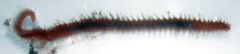 Anyone know what this is?
 -
Here's my understanding of BioBalls and Nitrates: BioBalls themselves typically don't harbor nitrates (I guess they could in some situations), but typically it's the other components of the wet/dry that are more apt to have a larger contributing factor to nitrates. Such as the foam block that the water passes through after going through the bioballs (normally) or perhaps the prefilter (some kind of foam sponge, spun fabric, etc). These are the areas that typically have higher nitrates. You may also see discussions on the web regarding taking the BioBalls out of wet/dry filters, this is typically posted by someone who has a good biological filtration (read live rock/sand) already in place. For a fish only system a wet/dry is a great way to provide necessary filtration. If you have live rock/sand in your tank, then the bio balls are redundant and can be removed if you so desire. From the Conscientious Marine Aqaurist (Page 70-71) The wet/dry filters effectively speed up the usual biological reactions and promote aerobic and anaerobic bacteria. For fish-only systems, wet-dry-filters continue to offer exceptionally good gas exchange and oxygenation, along with rapid biological filtration that can cope with heavy bioloads. My experience is that wet/dry filters are a good way to boost your filtration and that after your tank is cycled and if you have live rock/sand can still be a great tool, perhaps just without the bioballs that are redundant to the live rock/sand.
-
Is 6-8 weeks really the standard incubation period for Ich? Seems like the overall cycle is less than that. What about a fresh water dip, then QT for 2-3 weeks then the main tank? I understand that there's some level of risk anytime you add something new to the tank, but 6-8 weeks seems a little long to me. Opinions? horror stories? Am I too impatient?
-
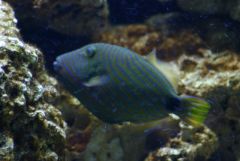 Here's the fiesty fish!